Sunday, November 26, 2023

Schizophrenia: treatment and recovery, research papers


Lancet:
Antipsychotic drugs versus cognitive behavioural therapy versus a combination of both
MAY 01, 2018
CBT as effective as meds
https://www.thelancet.com/journals/lanpsy/article/PIIS2215-0366(18)30096-8/fulltext
Our single-blind, randomised, controlled pragmatic pilot and feasibility trial showed that a study comparing antipsychotics, CBT, and antipsychotics plus CBT is possible in people with psychosis. Our trial had low attrition (<20% at each timepoint) that was balanced across interventions, and only a small proportion of participants received an intervention to which they were not allocated. All three interventions were broadly safe and acceptable.

http://www.dusunenadamdergisi.org/ing/fArticledetails.aspx?MkID=1124
Emerging Behavioral and Psychotherapeutic Interventions for Schizophrenia
May 2016
 There is rigorous empirical support for the efficacy of short term CBTp, and psychosocial interventions, such as supported employment and family interventions. Both effect sizes and other outcome measures indicate that these interventions have the potential to make a major difference in the lives of patients and caregivers, and to reduce economic burden of psychiatric disability. While cognitive remediation has been supported by several meta-analytic reviews, larger scale studies with systematic assessment of dose, task generalization, changes in everyday behavior, and individual differences in response are needed to establish standard implementations for dissemination. The striking procognitive and neurotrophic effects of physical activity in animal models has motivated preliminary studies of exercise based intervention for cognitive improvement in schizophrenia. Additionally, increased physical activity would likely improve health outcomes for patients with psychotic disorders. While clinical studies of exercise and activity interventions are very premature now, this approach is extremely promising. 


Problems with meds

Mental health professionals’ views and experiences of antipsychotic reduction and discontinuation

https://journals.plos.org/plosone/article?id=10.1371/journal.pone.0218711

Exercise Therapy for Schizophrenia
https://tinyurl.com/t498shf
Three randomized controlled trials met the inclusion criteria. Trials assessed the effects of exercise on physical and mental health. Overall numbers leaving the trials were similar. Two trials compared exercise with standard care and both found exercise to significantly improve negative symptoms of mental state (Mental Health Inventory Depression: 1 RCT, n = 10, Mean Difference [MD] 17.50 CI 6.70–28.30, Positive and Negative Syndrome Scale [PANSS] negative: 1 RCT, n = 10, MD 8.50 CI 11.11 to 5.89; figure 1). No absolute effects were found for positive symptoms of mental state. Physical health improved significantly in the exercise group compared with those in standard care (1 RCT, n = 13, MD 79.50 CI 33.82–125.18; figure 2), but no effect on peoples’ weight/BMI was apparent. One study compared exercise with yoga and found that yoga had a better outcome for mental state (PANSS total: 1 RCT, n = 41, MD 14.95 CI 2.60–27.30). The same trial also found that those in the yoga group had significantly better quality of life scores


Wednesday, January 15, 2020

Mental health: Videos I recommend

What I watch.

GREAT resource:

Excellent - the genetics of persons vulnerable to cannabis.

Cannabis and Schizophrenia: A causal (not coincidental) association

The evidence linking cannabis use to schizophrenia is compelling. No one who is truly open-minded and rational can dismiss the possibility that cannabis exposure causes schizophrenia (or a schizophrenia-identical persisting psychotic disorder).

Cannabis use affects brain maturation and affects the signaling of both dopamine and glutamate – two neurotransmitters with known relevance to schizophrenia. There is clear evidence of a dose-response relationship. Higher cumulative exposure to cannabis in early life translates into higher risk of schizophrenia in later life. Mendelian randomization, a genetic analysis strategy that eliminates the influence of confounding variables, suggests that the relationship between cannabis use and schizophrenia is causative – not coincidental.

This lecture is part of Northeast Ohio University's education(+)consultation service, SZconsult. A powerpoint file for this lecture is available at http://szconsult.org/

 ----
The fabulous Robert Sapolsky, Stanford Lectures -watch them all! but here are two specifically relating to mental illness:
 ----

The cause of psychosis with Dr. Kwame McKenzie


----

Early Intervention in Psychosis - Dr. Paddy Power


------

First Psychotic Episode by Dr. Alex Kopelowicz


Monday, November 4, 2019

Have you wondered why, for example, after years of yoga, you cannot sit in a perfect lotus, while others manage it effortlessly?
The answer may lie in the structure of your hips.

http://paulgrilley.com/bone-photos/


Stuart Mcgill, back and Yoga
http://www.yinyoga.com/newsletter25_Stuart%20McGill%20Lessons.php


Structure - we are all built differently!

Have you wondered why, for example, after years of yoga, you cannot sit in a perfect lotus, while others manage it effortlessly?
The answer may lie in the structure of your hips.

http://paulgrilley.com/bone-photos/


Stuart Mcgill, back and Yoga
http://www.yinyoga.com/newsletter25_Stuart%20McGill%20Lessons.php


Sunday, June 30, 2019

Do you have pain, discomfort, or an uncomfortable feeling of tightness between your shoulder blades?
Here are a few stretches that I myself use - especially when I have been on the computer for a long stretch of time.
In the stretch shown in the next image, the trick is to keep one arm bent as shown below, and use the opposite arm as a lever to pull it towards your body. Vary the angles to stretch different areas. 

The next stretch is a bit hard to understand from the picture.
-Sit down, bend over a bit, and cross your arms, placing your hands on the outer sides of your knees.
-Push your knees outward--you should feel a lovely stretch across your shoulders.
-Vary the angles; you can stretch different areas by bending over less, or more.

I love this neck stretch!

That's it for now-hope these help!

Thursday, August 9, 2018

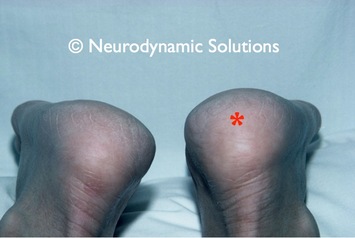
Heel Pain-Plantar Fasciitis and Neurodynamics

This is a fascinating read on a subject near and dear to me.
It was pain diagnosed as Plantar Fasciitis that sent me on a path that eventually led me to study massage, and my fascination with painscience and neuroscience
In my case, I may have had inflamed plantar fascia--but I definitely had a neurodynamic disorder/nerve entrapment, which was relieved by a medical massage therapist (my hero!) and self-massage and mobilization.

Some key points from this article: 
https://www.neurodynamicsolutions.com/neurodynamic-aspect-to-heel-pain.html

>However in relation to the more physical and benign causes, there are some key facts about neurodynamic problems at the ankle that are important when considering foot pain:

  • clearly not all foot/heel pain comes from nerves, but some does.
  • nerve abnormality is an underestimated cause of foot pain. Research shows that patients with foot pain can show reduced nerve conduction in various nerves in the ankle/foot region (Schon et al 1993)).
  • nerve problems can masquerade as plantar fasciitis and other local causes of heel pain.
  • there should be a distinction between 'nerve entrapment' and 'neurodynamic disorders' around the ankle and foot. Nerve entrapment is frank trapping of the nerve which is mostly likely a compressive lesion (eg. tarsal tunnel syndrome). But, whilst the term 'neurodynamic disorders' includes 'nerve entrapment', the term should be used to denote other types of mechanical and physiological problems in nerve function at this location, eg. nerve irritation and inflammation due to excessive use of the ankle combined with excessive pronation. This may produce a neurodynamic disorder (probably neuritis) caused by mechanical irritation.
  • tissue changes in the foot/heel eg. swelling and tenderness DO NOT EXCLUDE a neurodynamic cause. This is because the nerves can produce inflammatory changes in the tissues they innervate by a mechanism called 'neurogenic inflammation'.<

>Nerves that are exposed to excessive or repeated mechanical force may become hypersensitive and produce impulses in both afferent and efferent directions. Afferent impulses may cause pain and efferent ones may cause inflammation in the tissues innervated by the sensitised nerve (neurogenic inflammation).<


Thursday, August 2, 2018

Antidepressants Work for Major Depression! Not so Fast...

A recent article in Medscape states:
>The latest attempt to trick ourselves into believing that the past few decades of prescribing antidepressants has been an effective strategy comes from one of the most prestigious medical journals, The Lancet. The published meta-analysis' basic finding—since repeated all over the press—is that antidepressants work because they are all better than placebo. What they don't tell you is that they are hardly any better than placebo, and that the only drugs with clinically meaningful benefits are the ones that are used rarely today, the older tricyclic agents.<
>
The effect sizes seen are about a 2-point improvement versus placebo on the Hamilton Depression Rating Scale, which is lower than the minimum threshold of a 3-point improvement for clinically meaningful benefit set by an earlier 2004 guidance by the UK's then-named National Institute for Health and Clinical Excellence.[3]
They have found, repeatedly, that antidepressants either are not more effective than placebo, or they are slightly more effective.>Because of this, their results are not limited to or mostly influenced by the published literature, which is known to be markedly biased in favor of antidepressant drug efficacy. (This is because pharmaceutical companies usually have not published negative studies of antidepressants.)<

Wow

Read it all:
Antidepressants Work for Major Depression! Not so Fast


About the older tricyclics:
from Mayo Clinic: Tricyclic antidepressants and tetracyclic antidepressants

Thursday, July 26, 2018

An excellent TED talk explaining chronic pain

This TED talk does an excellent job of explaining chronic pain.
It includes a case study with a happy ending: CRPS..allodynia...horrid, unrelenting pain, that was resolved.


https://www.youtube.com/watch?v=CZ0gIiwjk_0


Wednesday, July 25, 2018

Why taking morphine, oxycodone can sometimes make pain worse

This is the best article I have seen on the subject of opioids and hyperalegesia.
The fact is that the phenomena of pain is still poorly understood.


>Ten days after that injury, half the rats received a 5-day treatment of morphine. Then over about 3 months, the researchers periodically measured the rodents’ threshold of pain by poking their hind paws with stiff nylon hairs of varying thicknesses. (The finer the hair that causes the rat to withdraw its paw, the logic goes, the more sensitive it is to pain.) After 6 weeks, injured rats that had received no morphine withdrew from the same kind of pokes as uninjured control rats. But morphine-treated rats remained sensitive to pokes with much finer hairs. 
It took them 12 weeks to return to the same pain sensitivity as the control rats, the team reports today in the Proceedings of the National Academy of Sciences. Even after the physical injury had presumably healed, they were in pain.<

http://www.sciencemag.org/news/2016/05/why-taking-morphine-oxycodone-can-sometimes-make-pain-worse

Wednesday, June 20, 2018

Fooling the nervous system to make a temporary change


A fascinating video on how easy it is to trick the nervous system into making temporary changes - and how easy it is to trick ourselves into thinking these changes will last.


https://www.youtube.com/watch?time_continue=441&v=mvW2lj194MQ

However, r
epeated exposure to stimuli, in the form of:

  • treatments - including massage, physical therapy, or functional therapy given by a therapist or trainer,
  • self-care, including self-massage and carrying out your exercise assignments from your therapist or trainer,
these can retrain and reset the nervous system to improve your functional movement and  reduce pain


This is a short clip showing a 75-year old tennis player who did not have surgery - the injury included a full-thickness tear of his shoulder joint and shoulder muscles  and joint fusion (glenoid humeral capsule, humeral head displacement supraspinatus + long head of biceps tendon, humeral space).

Two weeks after injury, he entered therapy--and 6 weeks later, was playing at 80% capacity.

https://www.youtube.com/watch?v=e8ir14-V-vs

Thursday, June 7, 2018

What Causes Foot Cramps?

What Causes Foot Cramps?
This lists the common medical reasons for cramping, and the role that footwear can play – this is valuable information for anyone who…has feet.
Whether you only use them for your day-to-day getting from place to place, for running, for dancing, you can help - and I believe, avoid – a number of common problems.

I suggest the toe extensor stretch that is shown about halfway through. If this induces foot cramping, it will give us information on how to tailor your treatments – I can do effective work without knowing all of the factors involved, but it of course helps to know 
J
https://www.youtube.com/watch/?v=nQ4A7Vo9Pf8

This is a detailed demonstration of the toe extensor stretch itself.
Toe Extensor Stretch with Dr Ray McClanahan
https://www.youtube.com/watch/?v=h2kaEOd3GcI
Dr. Ray McClanahan, Natural Sports Podiatrist shares a simple, profound stretch for toe extensor muscles, tendons and soft tissues. Restore proper toe tension and balance to aid many conditions including: hammertoes, plantar fasciitis, plantar fasciosis, plantar fibromatosis, capsulitis, metatarsalgia, and neuroma
https://www.youtube.com/watch?v=h2kaEOd3GcI

The product he offers, the toe spacer at https://www.correcttoes.com/, is the one that I have used, and I can recommend it. 

Comparative Study Of The Feet Of Barefooted And Shoe-Wearing Peoples
This is a fascinating (well, to a nerd like me) paper on the study of feet in primitive, barefoot populations from 1905.
If nothing else, the pictures are interesting – theses are photos of different populations that have never worn shoes.
http://refs.ahcuah.com/hoffman.htm


Tuesday, April 24, 2018

Use it or lose it--avoiding back pain

>Human tissue needs to be exposed to loads to become strong<
In other words, "use it or lose it"
Massage can help you with pain, yes - but the ultimate strategy for avoiding many common pain experiences is gradual, graded exposure of the tissues to load.
From the article
>Human tissue needs to be exposed to loads to become strong – and the spine is a good example of this. Regular loading prepares the joints, muscle and ligaments for normal tasks. Nobody would expect to run a marathon without preparing the body for such loading, so it seems logical that to be able to lift a weight requires exposure to that activity. – and the spine is a good example of this. <

https://theconversation.com/best-way-to-avoid-back-pain-lift-heavy-things-93702

Sunday, April 22, 2018

Learning WHY you hurt can reduce your pain

Can a program of pain neuroscience education combined with cognition-targeted motor control training reduce pain and improve function?

According to this triple-blinded, well-designed study - it seems that the answer is yes.
(this is why I, as a massage therapist who treats people in pain, offer painscience resources and recommend movement therapy)

Note that in this study:
  • They expected to find certain changes in the grey matter, in the brain itself...and did not. Admitting this indicates that the data is reliable, and does not suffer from confirmation bias.
  • The fact that these changes were not found is interesting.
Read it to learn more (includes a link to the study itself)https://www.medpagetoday.com/neurology/painmanagement/72374

Wednesday, April 18, 2018

CRPS - a variety of articles from the epicenter of painscience

I have not yet read all of these articles--I am simply bookmarking them here for myself and for any people searching for information who stumble across this post.

The source, https://bodyinmind.org/ is based at the  University of South Australia in Adelaide, and Neuroscience Research Australia in Sydney. The amazing Lorimer Moseley "leads the group in undertaking research that traverses ‘the translational pipeline’ from fundamental behavioural and physiological experiments in humans, to major randomised controlled trials and prognostic studies."

https://bodyinmind.org/?s=CRPS.

Tuesday, April 17, 2018

Massage and Back Pain - one of the better studies

There is surprisingly little research--real research--into how, why, or if massage actually helps with pain.

Why is that? Well, for one thing, a study needs a control group--people who think they are getting a treatment or medication, who aren't. Well, how do you do 'fake' massage? You can't--the person in the control group will know if they are being massaged or not!

Most of us know, instinctively, that massage feels good, is calming, is helpful for the nervous system. It is a rare person who does not crave a good shoulder rub when neck and shoulders are stiff and painful from sitting, driving, schlepping little kids around, digging ditches, milking cows, pruning trees (personal experience here!)

Here is the study--one of the better ones on the subject.

https://www.ncbi.nlm.nih.gov/pmc/articles/PMC3570565/

Tuesday, April 3, 2018

Under your Skin: How you perceive touch

This is a great picture, showing how touches on your skin is perceived by your brain - including, of course, how massage is perceived.
Via mechanoreceptors in the skin, your brain collects information such as pressure and temperature. Your brain then evaluates where you are, checks to see if you have been in this place or this situation before, and decides what to do. If the brain decides you are in danger--if, for example you touch a sharp needle and prick your finger, the brain will take you to safety--by making your finger hurt, and activate muscles to make you pull your finger away.
It is important to understand that, although there are different kinds of mechanoreceptors in your skin, there is no such thing as a 'pain receptor'.
The picture is from this article, which explores if keratinocytes, the most common cells in the outer layer of skin, the epidermis, have a role in touch sensation, and how they communicates communicate with cell-sensory neuron communication, The researchers postulate that this may allow for easy, non-invasive treatment options for pain currently in use--specifically topical analgesics and antipruritics.

Schematic diagram depicting the proposed mechanism for ATP release induced by mechanical stimulation of keratinocytes and its interaction with P2X4 on sensory nerve endings.
Touching of the skin, and therefore the mechanical stimulation of keratinocytes, elicits release of factors such as ATP, which in turn, acts on P2X4 and possibly other receptors on sensory neurons found within the epidermis, thereby causing action potential firing in the neurons and downstream effects leading to touch perception.

Monday, March 26, 2018

The importance of touch.

The importance of touch.
I originally began studying massage because of its therapeutic value.
It means so much more. We are hardwired by evolution - the experience of touch is necessary for our emotional and physical well-being, down to our very immune system.
I believe that the hyper vigilance that has sprung up regarding touch, including casual social contact, is depriving us of this basic human interaction.

https://www.theguardian.com/society/2018/mar/07/crisis-touch-hugging-mental-health-strokes-cuddles
Strokes and hugs are being edged out of our lives, with doctors, teachers and colleagues increasingly hesitant about social touching. Is this hypervigilance of boundaries beginning to harm our mental health?
Illustration by Harriet Lee-Merrion
 Illustration by Harriet Lee-Merrion
W
hen did you last touch someone outside your family or intimate relationship? I don’t mean a brush of the fingers when you took your parcel from the delivery guy. I mean: when did you pat the arm or back of a stranger, colleague or friend? My own touch diary says that I have touched five people to whom I’m not related in the past seven days. One was a newborn and two were accidental (that was the delivery guy). Touch is the first sense humans develop in the womb, possessed even of 1.5cm embryos. But somewhere in adulthood what was instinctive to us as children has come to feel awkward, out of bounds.

Wednesday, March 21, 2018

Older Muscles - Protein Intake & Muscle Mass Maintenance in Older Adults

This is a subject near and dear to my heart - I find it incredibly annoying that, at the age of 56, laying off my usual active lifestyle for a few weeks, my muscles melt away.
Unfortunately, muscle mass and strength decrease with age, even in elite older athletes, a condition called sarcopenia,and the process does indeed speed up after age 50.

This sucks.

Now, exercise does indeed offer a protective effect - so, yes, three weeks without dancing, hiking, or massaging caused my muscles to practically wither away (well, I was busy, my son got married :-)).

Most of us know that you need protein to build - and maintain - muscle.
I did not know that after 50, the body apparently is less efficient at metabolizing protein--according to the papers linked to below, older people need more protein to build/ maintain muscle.

In addition, protein intake should be divided between meals in order to maximize effects - this is true in individuals of all ages.

I myself do not take supplements of any type, nor do I intend to; the interplay of nutrients in any food is complex, and is not understood--no matter WHAT the manufacturers of supplements and vitamins might tell you.

Therefore:
  • I intend to make sure I take in adequate protein during the day, and increase that slightly on days that I exercise.
  • I will space my protein over my meals, with a daily goal of 45 to 50 grams - appropriate for my size, weight and age.
    For example, my  usual breakfast: plain yogurt, fruit, a few nuts works out to be 12 grams of protein, my usual lunch of salad - arugula, olives, feta cheese, chick peas - works out to be about 25 grams. 
  • I will not go the 'high protein' route - this has not consistently been shown to be of benefit, and may be detrimental to kidney function.

Dietary protein recommendations and the prevention of sarcopenia Protein, amino acid metabolism and therapy, 2009 full text article

Functional impact of high protein intake on healthy elderly people, 2008, full text

Moderating the portion size of a protein-rich meal improves anabolic efficiency in young and elderly,
2009 full text

Protein and Amino Acid Restriction, Aging and Disease: from yeast to humans, 2014, full text
Leucine supplementation chronically improves muscle protein synthesis in older adults consuming the RDA for protein, 2012, full text

Dietary protein and resistance training effects on muscle and body composition in older persons., 2007, abstract


Thursday, March 1, 2018

Allergies: pollen, OAS. contact dermatis--incredibly complex

Recently, I became aware that pollen allergies, most commonly to the pollen of specific varieties of tree and grass, coexist with OAS, Oral Allergy Syndrome. In OAS, a person will often develop itching or burning in the mouth and throat withing minutes of eating a particular food (although symptoms may be delayed). They can also react with histamine release in the digestive system - causing diarrhea and other GI symtoms.

OAS puts a person at risk for anaphylaxis.

Many years ago, when on of my children developed atopic dermatitis as an infant, and then asthma, I kept a detailed daily diary. I noted, for example, that if that child was sensitized, having asthmatic episodes, eating tomatoes would cause eczema. I became aware that allergy is very complex--and realized this is one of the reasons bullshit artists, healers, etc, have a field day with allergy sufferers.

It is the height of the allergy season here, olives are flowering, and as I listened to the sneezing of my loved ones, I remembered that they have also mentioned itching of the mouth and throat when eating melons and certain other fruit. So I started reading.

I am recording some of the articles I have read--good way to keep track!

Atopic Dermatis:
https://www.ncbi.nlm.nih.gov/pmc/articles/PMC3970830/

Allergies, hypersensitivties, allergy pathways---good information:
http://www.bfr.bund.de/cm/349/allergies_caused_by_consumer_products_and_foods.pdf

Cypress pollen/peach cross-reactivity--and conditional sensitization ( BP14) , once sensitized, one is more likely to become sensitive to similar allergens within the same protein family which are present in other allergen sources.

https://www.sciencedaily.com/releases/2017/08/170818092133.htm

Pollen-food
https://www.aaaai.org/conditions-and-treatments/library/allergy-library/outdoor-allergies-and-food-allergies-can-be-relatehttps://www.aaaai.org/conditions-and-treatments/library/allergy-library/outdoor-food-allergies-relate


Not enough detail, but a good place to start:
http://www.foodallergens.info/Facts/Pollen&Food/Which_Foods.html

https://www.global.hokudai.ac.jp/blog/allergies-cross-reactivity-between-cypress-pollen-and-peachescitrus-fruits-finally-explained/

from 1995, but worth saving:
https://www.ncbi.nlm.nih.gov/pubmed/7545882

Excellent, detailed
https://www.ncbi.nlm.nih.gov/pmc/articles/PMC4482820/

This regards eosinophilic esophagitis. Fascinating.
http://www.aaaai.org/conditions-and-treatments/related-conditions/eosinophilic-esophagitis

Database:
http://research.bmh.manchester.ac.uk/informall/allergenic-foods/

Wednesday, February 28, 2018

Pain Stories: Back Pain, Scans, and Belief

If you suffer from long-standing back pain, please watch this. It is worth 15 minutes of your time.

Professor Peter O'Sullivan on what drives back pain.
https://www.youtube.com/watch?v=dlSQLUE4brQ


Schizophrenia: treatment and recovery, research papers

Lancet: Antipsychotic drugs versus cognitive behavioural therapy versus a combination of both MAY 01, 2018 CBT as effective as meds htt...